How Much Does a Commercial Coffee Machine Cost in Australia? Buy vs Lease vs Rent
Introduction
If you’re opening a café or setting up coffee for your office, one of the first questions is simple: how much does a commercial coffee machine actually cost in Australia? The honest answer is that it depends on the machine, how many cups you serve, and whether you buy, lease or rent. This guide breaks down each option with realistic price ranges, the ongoing costs people forget, and how to choose.
As a general guide, commercial coffee machines in Australia can range from around $2,500 for smaller commercial or automatic machines to more than $30,000 for premium, high-volume equipment. A professional espresso machine for a busy café will commonly sit somewhere in the middle of that range.
But the purchase price isn’t the only consideration.
Businesses can also buy a machine outright, finance or lease it, or rent a machine, depending on their cash flow and how long they expect to use the equipment.
So which option makes the most sense?
Commercial coffee machine prices in Australia
There is a significant difference between a coffee machine designed for a small office and one designed to produce hundreds of coffees during a busy café service.
As a broad guide:
| Commercial coffee machine | Approximate price | Typical application |
|---|---|---|
| Compact commercial machine | $2,500–$7,000 | Small cafés, restaurants, offices |
| Mid-range 2-group machine | $7,000–$15,000 | Cafés, restaurants and bakeries |
| Premium 2-group machine | $15,000–$25,000 | Busy cafés and hospitality |
| Premium 3-group machine | $25,000–$35,000+ | High-volume cafés |
| Commercial automatic machine | $4,000–$20,000+ | Offices, hotels, self-service and hospitality |
These are indicative prices rather than fixed retail prices. Specifications, brand, automation, boiler configuration and included equipment can all affect the final price. Current Australian market guides show a similarly broad range, with professional café equipment commonly costing considerably more than entry-level commercial machines.

Buying a commercial coffee machine outright
Buying means you own the machine and avoid ongoing finance costs. It makes sense if you have the capital and plan to keep the machine for many years.
- Pros: No monthly payments, full ownership, lower total cost over a long period, freedom to choose any servicing provider.
- Cons: Large upfront cost, you carry all repair risk once the warranty ends, and your machine can become outdated.
Leasing a commercial coffee machine
Leasing spreads the cost into regular payments over a fixed term. If you’re asking how much it costs to lease a commercial coffee machine in Australia, expect it to depend on the machine’s value, the term, and your business’s credit profile. Guides in the market quote figures from roughly $120 to $500 a month.
- Pros: Low upfront cost, predictable cash flow, easier upgrades at the end of the term.
- Cons: You usually pay more overall than buying, and you’re locked into a contract.
Renting a commercial coffee machine
Renting is typically shorter-term and more flexible than leasing, which is handy for new businesses testing demand, offices, or events.
- Pros: Minimal commitment, often includes servicing, easy to swap or return.
- Cons: Highest cost per month over time, and you never own the machine.
What determines the price of a commercial coffee machine?
Several factors can make one commercial coffee machine substantially more expensive than another.
Number of groups
The number of groups affects how many espresso shots can be prepared simultaneously.
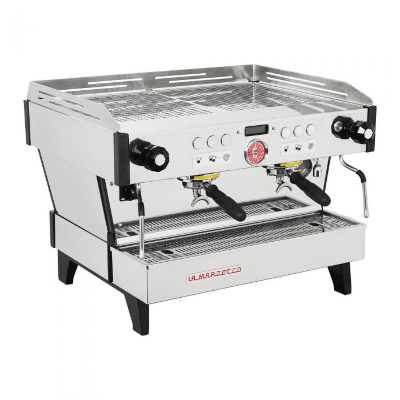
A single-group machine can be suitable for lower-volume businesses, while two-group machines are a common choice for cafés. Three-group machines provide additional capacity for venues dealing with heavy peak-period demand.
A machine with more groups will generally cost more, but it can also increase your ability to serve customers quickly.
Boiler and heating system
Commercial machines need to maintain stable brewing temperatures while also providing enough steam for milk-based drinks.
Larger boilers, multi-boiler systems and more sophisticated temperature-control systems generally increase the cost of the machine.
For a busy café, paying more for the right heating capacity can be worthwhile. A cheaper machine that struggles during the morning rush can quickly become a bottleneck.
Manual vs automatic operation
Traditional commercial espresso machines rely on a trained barista to grind, dose, tamp and extract coffee.
Fully automatic and bean-to-cup machines automate much of this process.
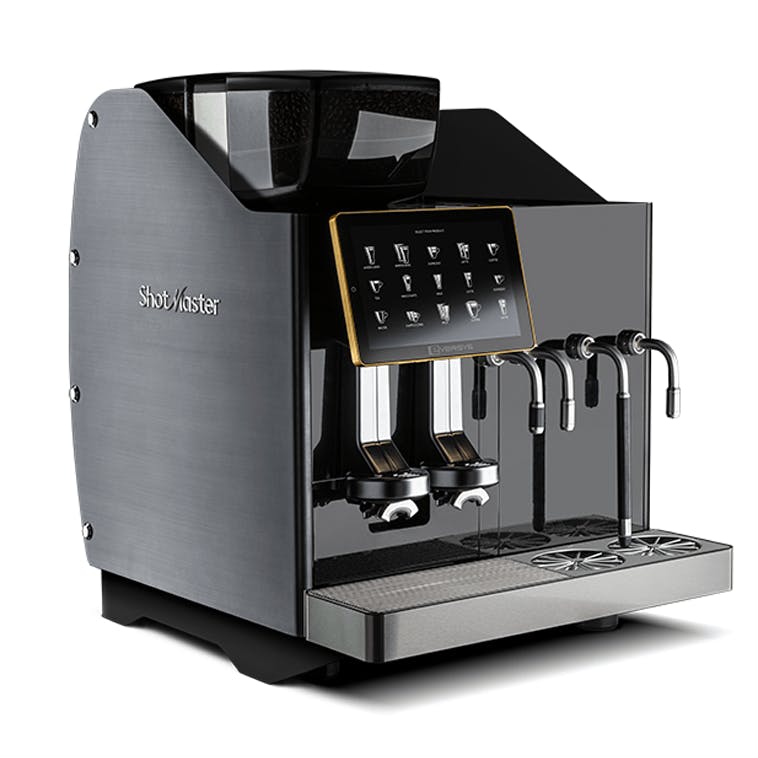
Automatic machines can make sense for offices, hotels, self-service environments and businesses where consistency and ease of use are more important than traditional barista preparation.
Brand and build quality
Commercial coffee machines are designed to operate in demanding environments, but construction quality, components, engineering and serviceability vary considerably between machines.
A commercial machine should be considered a long-term business asset rather than simply another piece of kitchen equipment.
Automation and features
Features such as programmable dosing, automatic milk systems, electronic temperature control, touchscreen interfaces, automatic cleaning and telemetry can all affect the purchase price.
The trick is to pay for features that solve an actual business problem rather than simply buying the most expensive machine available.
Lease vs buy: which is better for a café?
If cash is tight at opening, leasing or renting protects your working capital for fit-out, stock and wages. If you’re established and plan to run the same machine for 7+ years, buying usually wins on total cost. A good test is to compare the total lease payments over the term against the purchase price plus expected servicing.
The hidden costs of a commercial coffee machine
The sticker price is only part of the picture. Budget for:
- Servicing and maintenance: Annual servicing commonly runs from a few hundred to more than $1,000 depending on what’s required in the service.
- .See our guide to how to maintain your coffee machine and how to descale an espresso machine.
- Water filtration: Essential in hard water areas to prevent limescale and extend machine life.
- Installation: Plumbing, power and drainage, which vary by site.
- Grinders and accessories: A quality grinder is a separate purchase. Browse our Eureka and Mazzer ranges.
- Repairs and downtime: Factor in what a broken machine costs you in lost sales. Our coffee machine servicing team can help.
- Staff training: Consistent coffee depends on it, and automatic machines reduce this cost.
New vs second-hand commercial espresso machines
Second-hand machines can cut the upfront price, but check service history, parts availability and warranty. A cheap used machine with no support can end up costing far more than a new or leased one.
Which option suits your business?
- New café, limited capital: Lease or rent.
- Established café, long-term plans: Buy.
- Office or workplace: A fully automatic machine, leased or rented for simple upkeep. See our Eversys range.
- Unsure about volume: Start with a rental, then move to lease or buy.
Buying a commercial coffee machine outright
Buying outright is the simplest option.
You pay for the machine and, once the transaction is complete, the business owns the equipment.
Advantages of buying
You own the machine
There are no ongoing lease payments once you’ve paid for it.
Potentially lower long-term cost
If you keep the machine for many years, buying outright can be more economical than continually paying rental or finance charges.
No finance contract
You don’t have to worry about a finance agreement continuing after you’ve stopped using the machine.
Greater control
You can generally decide when the machine should be serviced, repaired, upgraded or replaced.
Disadvantages of buying
The biggest disadvantage is the initial capital requirement.
Spending $15,000, $20,000 or $30,000 on coffee equipment means that money is no longer available for other parts of the business.
For a new café, that money might otherwise be needed for:
- Shop fit-out
- Kitchen equipment
- Rent and bond
- Signage
- Initial stock
- Staff wages
- Marketing
- Working capital
For an established business with healthy cash reserves, buying can make considerable sense.
For a new business trying to preserve cash during its first year, financing may be more attractive.
Leasing or financing a commercial coffee machine
Leasing allows you to spread the cost of the equipment into regular payments rather than paying the full purchase price upfront.
Australian equipment finance providers offer commercial coffee machine leasing with terms commonly ranging from several years, depending on the provider and agreement.
For example, a business might finance a $20,000 machine rather than paying $20,000 upfront.
The actual repayment will depend on factors such as:
- Machine price
- Deposit, if applicable
- Finance term
- Interest rate
- Business circumstances
- Residual or end-of-term arrangements
Some providers advertise coffee equipment finance based on weekly or monthly repayments rather than a large upfront payment.
Advantages of leasing
Preserves cash flow
Instead of using a large amount of capital immediately, the business can spread the cost over time.
Predictable repayments
Regular payments can make equipment costs easier to incorporate into a monthly budget.
Access to better equipment
Financing can make a higher-quality commercial machine accessible without paying its entire purchase price upfront.
Potential upgrade flexibility
Depending on the agreement, businesses may have options to upgrade equipment at the end of the term.
Disadvantages of leasing
The total amount paid over the term may be higher than buying outright.
You also need to understand exactly what happens at the end of the agreement.
For example:
- Do you own the machine?
- Is there a residual payment?
- Can you return it?
- Can you upgrade it?
- Can you buy it for a final amount?
Don’t compare finance purely on the weekly repayment. Compare the total cost over the entire agreement.
Renting a commercial coffee machine
Renting is slightly different from buying or financing.
Instead of ultimately purchasing the equipment, you’re paying for the right to use it for an agreed period.
Depending on the rental arrangement, servicing, maintenance and other services may also be included.
This can be particularly attractive for businesses that don’t want to own the equipment or that expect their coffee requirements to change.
Some Australian commercial coffee equipment rental arrangements are available with relatively low monthly payments, while fully managed arrangements can include servicing and consumables.
Advantages of renting
Lower upfront cost
You can get commercial equipment without purchasing it outright.
Predictable costs
A rental agreement can make budgeting easier.
Potentially less responsibility
Some arrangements include servicing and maintenance.
Flexibility
Renting can make sense when you don’t know how long you’ll need a particular machine.
Disadvantages of renting
You don’t necessarily own the machine at the end.
The total amount paid over a long rental period can also exceed the cost of purchasing the same equipment.
The terms vary significantly between providers, so read the agreement carefully.
What other costs should you budget for?
The machine price is only the beginning.
Installation
Many commercial espresso machines require mains water, drainage and suitable electrical connections.
Installation costs will depend on the existing services at your premises and whether plumbing or electrical work is required.
Water filtration
Water quality is particularly important for commercial espresso equipment.
Scale and mineral build-up can affect machine performance and increase maintenance requirements.
A suitable filtration system should therefore be considered part of the coffee machine investment rather than an optional accessory.
Servicing
Commercial coffee machines need regular cleaning and professional servicing.
The frequency will depend on the machine, usage and manufacturer’s recommendations.
A busy café using a machine hundreds of times a day will place considerably more demand on its equipment than a small office.
Cleaning
Daily cleaning is essential.
You should budget for products such as:
- Backflush detergent
- Group head brushes
- Steam wand cleaning products
- Milk system cleaner
- Grinder cleaning products
- Water filter replacements
Staff training
If you’re buying a traditional espresso machine, don’t underestimate the value of proper barista training.
The most expensive coffee machine in the world won’t produce great coffee if the people using it aren’t trained to operate it correctly.
FAQs
How much does a commercial coffee machine cost for a small café?
Many small cafés spend between $5,000 and $15,000, depending on group heads and automation.
Is it cheaper to lease or buy a coffee machine?
Buying is usually cheaper over the long term, while leasing is cheaper upfront.
Can I lease a coffee machine for my office?
Yes. Fully automatic machines are popular for offices because they need little training.
How often does a commercial coffee machine need servicing?
At least once a year, more often for high-volume venues.
Not sure whether to buy, lease or rent? Talk to the Coffee Machine Guru team for a tailored quote based on your volume and budget.